ServicesVehicle Restraints
Vehicle Restraint Repair in Palmerton
A vehicle restraint holds the trailer to your dock while forklifts drive in and out. We repair, adjust and maintain hook and wheel restraints, along with their lights and interlocks, so the unit you already own keeps working safely for years.
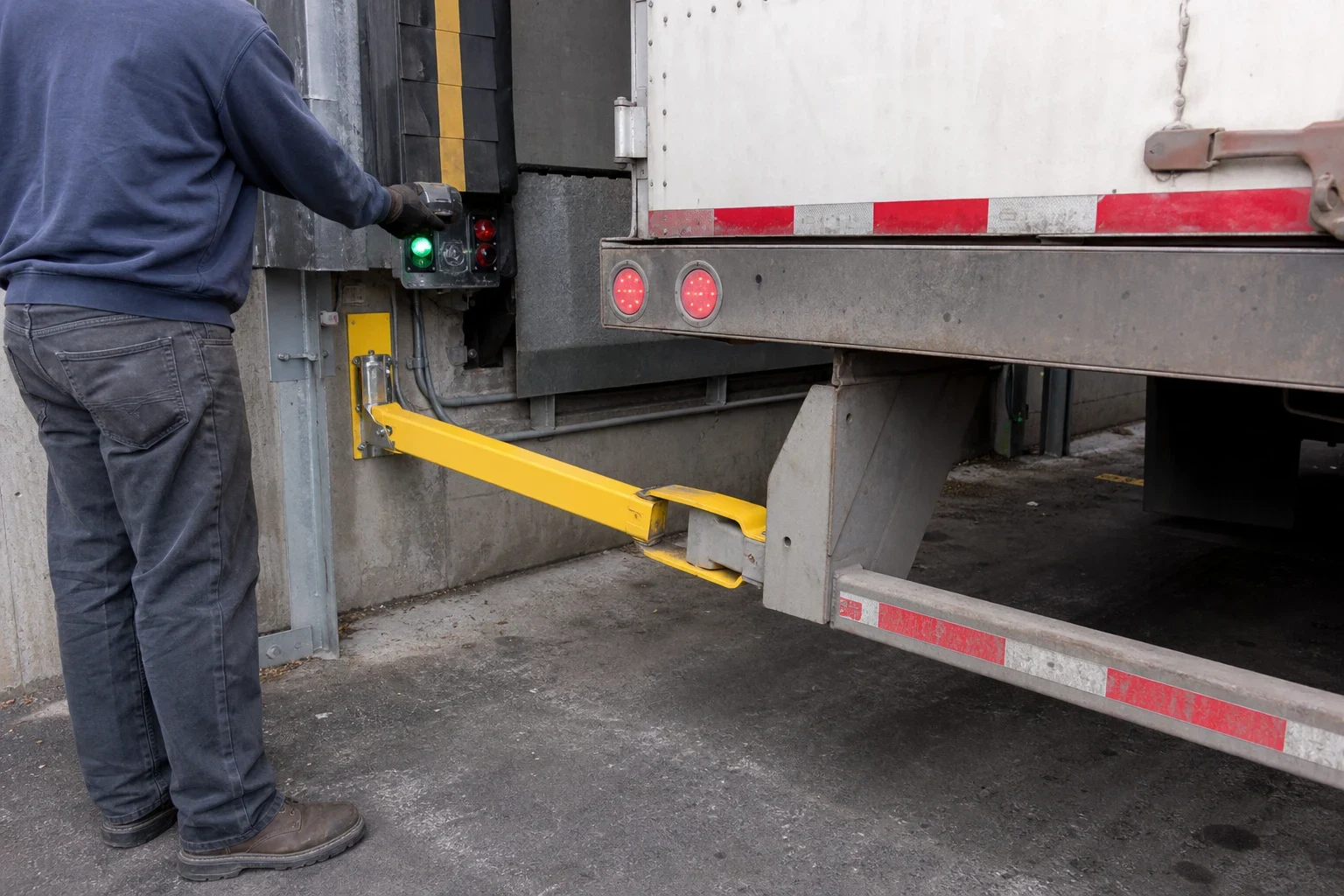
What a Vehicle Restraint Does and When It Needs Attention
Every time a forklift crosses the dock plate, it pushes the trailer a little. Over a shift, that movement adds up to trailer creep, and an early departure can leave a gap with a loaded truck halfway across it. A restraint stops both by locking onto the trailer's rear impact guard or its wheels and telling the driver and the dock crew, by light, when it is safe to work.
Most restraints we see are not worn out. They are out of adjustment, short on lubrication, or running on a burned-out light or a misaligned sensor. Careful upkeep on those parts usually brings a unit back to dependable service for far less than replacing it, and we tell you plainly when a unit has reached the point where it no longer makes sense to keep repairing it.
What Our Vehicle Restraint Service Covers
- Hook and carriage repair
- We inspect the rotating hook for bending and wear, check that the carriage rides freely on its track, and replace springs, rollers or drive parts that have lost their strength. A hook that fails to rise high enough to catch a low bar gets corrected at the source, not just reset.
- Wheel-based restraints
- For wheel restraints and automatic chock systems, we check the arm or barrier travel, the base anchoring and the hydraulic or electric drive. Loose anchors get reset into sound concrete.
- Lights and signage
- Inside and outside communication lights are tested and replaced as needed, and faded driver signage is noted. The red and green signals are often the first part of the system to quietly stop working.
- Controls, sensors and interlocks
- We test the control panel, the engagement sensors and any interlock tied to your dock leveler or overhead door, so the sequence runs in the right order every time.
- Corrosion and cleaning
- Restraints sit at ground level, in slush and road salt. We clean the track and housing, treat surface rust before it spreads, and lubricate the moving parts with products suited to cold, wet weather.
Signs Your Restraint Needs Service
The hook misses some trailers
If certain trailers have to be chocked by hand because the hook will not catch the bar, the reach or spring tension has drifted. It tends to get worse over time.
Lights stay red or never change
A light that does not match what the restraint is actually doing is worse than no light at all. Drivers and forklift operators learn to ignore it.
Grinding, dragging or slow travel
Noise or hesitation as the carriage moves usually points to debris, dry rollers or a fatigued spring. Caught early, it is a modest repair.
Visible damage after an impact
A trailer backing in hard can bend the housing or twist the hook. Even when the unit still cycles, a bent part may not hold under load.
Crews bypass it
When people start overriding the restraint to keep trucks moving, it has become a safety and compliance problem, not just an equipment one.
What Drives the Price of Restraint Service
The cost is set mostly by what the inspection turns up, not by the visit. An adjustment and new lubrication is a quick job, while a bent carriage or a failed drive needs parts and more time. You get the price by phone or in writing before work starts, and our repairs are backed by a 1-year labor warranty.
Restraint style
Hook restraints, wheel restraints and manual units all take different parts and different amounts of labor.
Wear and rust
Corroded tracks, frozen pins and cracked anchors take extra time. Units that have been serviced regularly tend to cost less and go faster to keep running.
Getting the parts
Everyday wear parts are simple to find. Older or discontinued models can need parts ordered or modified, which changes both price and timing.
How many doors
Doing several restraints on one visit shares the setup time across all the doors and usually brings the cost per unit down.
How a Restraint Service Visit Runs
- 1
A phone conversation first
You tell us the make, how many doors, and what the restraint is or is not doing. We plan the visit around your receiving schedule so a door is out of service only when it suits you.
- 2
Inspection at the dock
We cycle each unit, measure hook reach, check anchoring and test every light and interlock. You see what we found, in photos where it helps, before any work starts.
- 3
A written estimate with options
We list the repairs line by line and separate what is needed now from what can wait for your next preventative maintenance visit.
- 4
Repair, testing and cleanup
Our technicians are forklift and scissor lift training certified, which matters when working around active lanes and raised dock equipment. Once the work is done we test the restraint against a trailer where possible, clean up, and hand the door back.
Vehicle Restraint Questions
Can you repair our restraint, or does it need to be replaced?
Most of the time it can be repaired. Hooks, springs, rollers, lights and sensors are all replaceable parts. If the housing is badly bent or the model can no longer be supported, we say so and explain your choices through our equipment sales and installation service.
Do you work on restraints from different manufacturers?
Yes. We service hook and wheel restraints from a range of makers. Tell us the brand and model when you reach us, and we will bring the parts that are most likely to be needed.
How often should a vehicle restraint be serviced?
For a busy dock, a scheduled inspection a few times a year keeps adjustment and lubrication from drifting. Docks that see heavy winter salt and slush benefit from a visit before and after the cold months. We can fold restraints into a broader preventative maintenance plan alongside your dock levelers and doors.
Will our dock have to shut down during the repair?
Only the door being worked on is out of service. We schedule around your shipping and receiving windows and work one door at a time, so the rest of the facility keeps moving.
Is the repair work warrantied?
Yes. Our restraint repairs come with a 1-year labor warranty. We explain what that covers when we go over your estimate.
Keep the Restraints You Have Working Well
We serve facilities in Palmerton and nearby towns including Lehighton, Slatington and Lower Towamensing. Give us a call to set up an inspection and get your quote by phone.