ServicesEquipment Installation
Loading Dock Equipment Installation in Palmerton, PA
We install dock levelers, vehicle restraints, seals and doors at warehouses and receiving docks, setting each unit square and anchored into sound concrete. Careful installation is what lets good equipment run for many years on routine care instead of constant repairs.
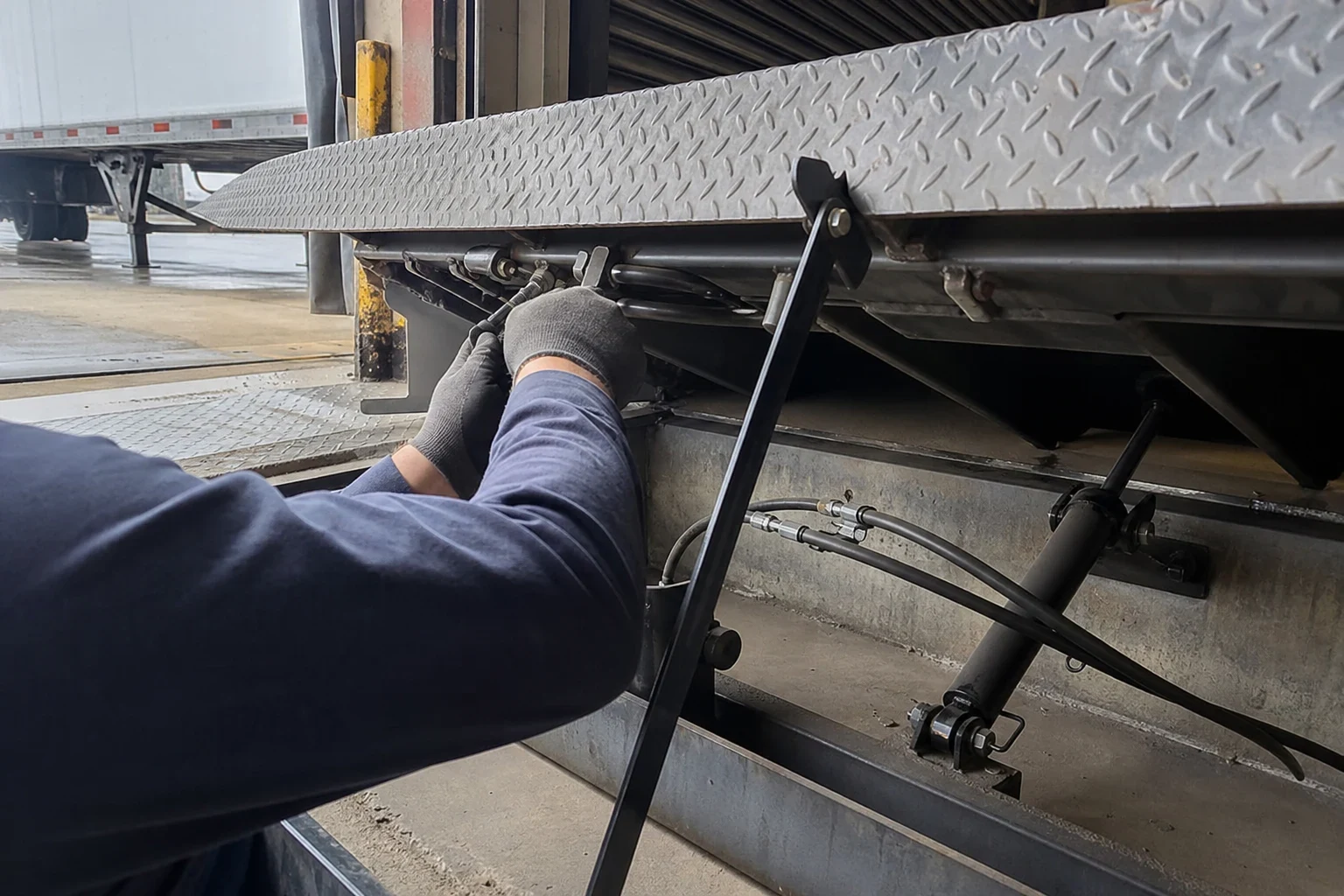
Installation that sets up years of easy upkeep
We install dock levelers, vehicle restraints, dock seals and shelters, bumpers, and the overhead doors and high speed doors that close off each position. Much of a dock unit's working life is decided on the day it goes in. A leveler set in an out-of-square pit, or a restraint anchored into crumbling concrete, will wear early no matter how well it is looked after.
So we treat installation as the first entry in a long maintenance record. We check the pit, the curb angles and the dock wall before anything is bolted down, set each unit level and plumb, and leave you the details your crew and your preventative maintenance schedule will need later.
It is the right call when you are adding a position, replacing equipment that is past repair, upgrading from mechanical to hydraulic, or adding restraints to tighten safety at the dock. If you are still choosing equipment, our Loading Dock Equipment Sales page explains how we help with that step.
What an installation includes
- Pit and curb assessment
- Before anything is set, we measure the pit, check the embedded curb angles for rust or bending, and look closely at the concrete at the dock face. Years of Pennsylvania freeze and thaw often leave spalled edges that should be repaired first. You get photos and a plain explanation of what we found.
- Dock leveler setting
- Hydraulic, mechanical or air-powered levelers are shimmed and welded or anchored so the deck rests flush with the floor. We run the full range of travel, the lip extension and the toe guards before we sign off.
- Vehicle restraint mounting
- Restraints are anchored to solid concrete, wired to their inside and outside signal lights, and tested against a trailer's rear impact guard. Drivers and dock staff see the same clear signal.
- Seals, shelters and bumpers
- We size seals and shelters to the trailers you actually receive, so they close the gap without being crushed flat. Bumpers are set at the right projection to protect both the wall and the leveler lip.
- Doors, controls and interlocks
- Overhead doors, high speed doors and rolling grilles go in with tracks plumb, springs or drives balanced and controls within easy reach. Interlocks between door, leveler and restraint can be wired during the same visit.
- Cleanup and handover
- We clear the work area, walk your operators through daily use, and leave manuals and serial numbers for your records.
Signs it is time for new dock equipment
A leveler that is past repair
Cracked deck plate, worn-through hinges or a cylinder rebuilt more than once usually means another repair only buys a short reprieve. Replacement often costs less over the long run.
Chocks are your only restraint
If a trailer has ever crept away from the dock during loading, a vehicle restraint closes a real safety gap that wheel chocks leave open.
Daylight around parked trailers
Torn or missing seals let conditioned air out and rain, snow and dust in. That shows up in energy costs and damaged product.
Your trailers or volume have changed
Adding doors, or receiving trailers taller or lower than the dock was built for, calls for equipment sized to the work you do now.
Manual units that fight your crew
Pull-chain levelers that need constant spring adjustment wear on the equipment and on the people using it every shift.
What shapes the price of an installation
No two docks are alike, so we price each job after seeing it. You can get your quote by phone to start, and the written scope after our site visit lists every item so nothing appears later as a surprise.
Equipment type and capacity
A hydraulic leveler rated for heavy forklift traffic costs more than a lighter mechanical unit. Restraint style and door type move the price the same way.
Condition of the pit and concrete
Sound pits need little prep. Bent curb angles, spalled edges or an out-of-square pit add concrete and steel work before installation can begin.
Number of positions
Several doors done in one project share setup and travel, which usually lowers the cost per position.
Electrical and interlocks
New power runs, control panels and interlocks between door, leveler and restraint add materials and labor.
Working around your operations
Phasing the job to keep receiving open, or working outside normal hours, affects scheduling and crew time.
The steps of an installation
- 1
We visit and measure
At your facility we measure every position and record which trailers you receive and how often. We also learn your shifts and receiving windows so the job is planned around them.
- 2
A line-by-line plan and schedule
Nothing gets booked until it is written down: the equipment, any pit or concrete repair and the electrical work, each on a separate line. Where the layout permits, we order the positions so some doors keep receiving while we work on others.
- 3
The install itself
Our crew holds forklift and scissor lift training certification, which counts when a leveler is lowered into a pit or a door header goes up at height. We barricade the work zone, cover finished floors and keep aisles open for your people.
- 4
Testing and turning it over
We cycle, adjust and run each unit while your operators watch. A 1-year labor warranty covers our installation work, and we can schedule preventative maintenance visits from that point on.
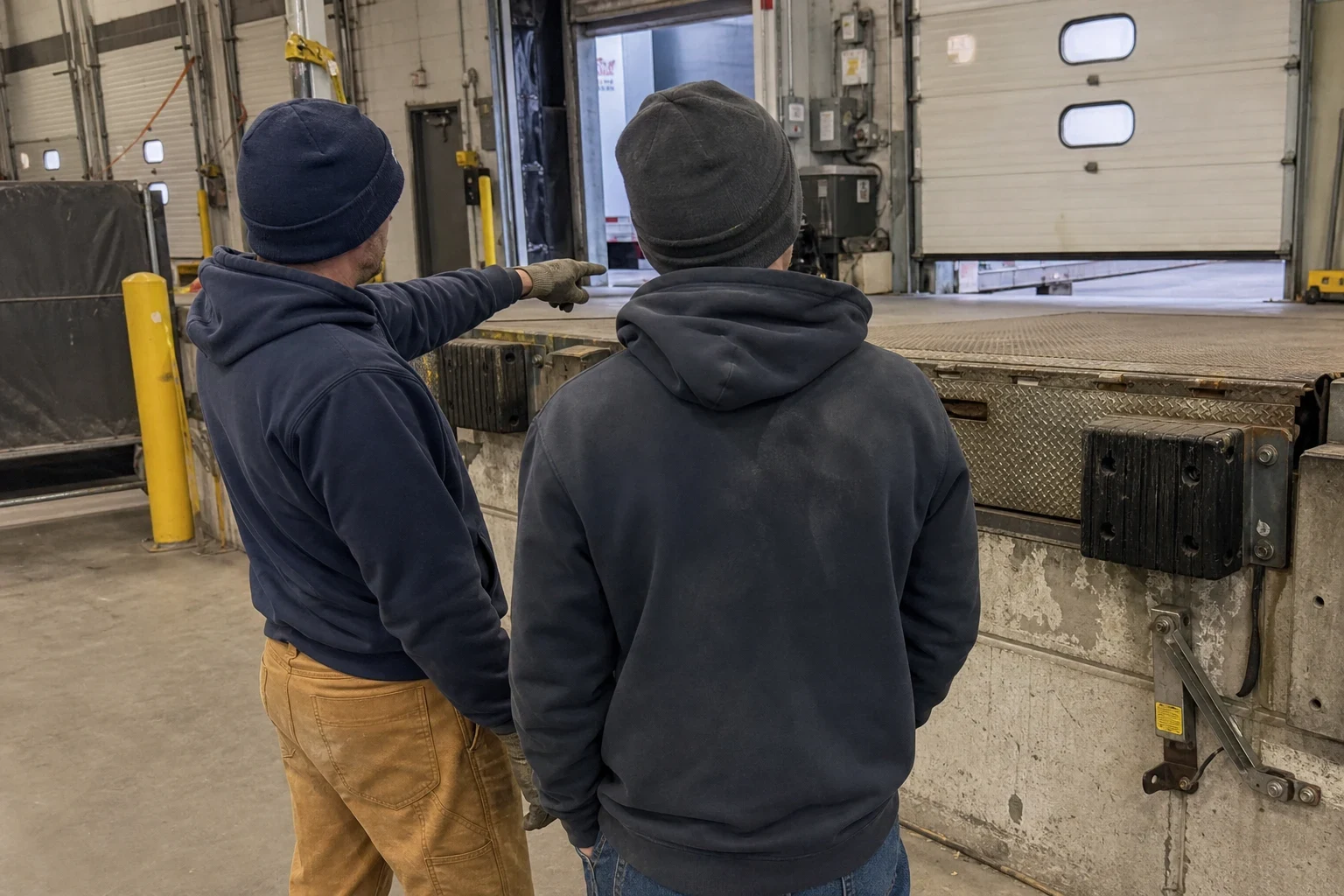
Dock installation questions we get
Can a new leveler go into the pit we already have?
Frequently, yes. We start by measuring the pit and checking the curb angles and concrete. A sound pit near standard size can take a new leveler directly. If it needs work, we show you what and explain how it affects how long the new unit will last.
How much time does an installation take?
That depends on the equipment and the state of the pit. Swapping a leveler in a sound pit often takes a day or less per position, while concrete repair or new electrical stretches it out. Your written scope spells out a realistic timeline.
Does the entire dock need to close?
Typically not. When the layout allows, we handle one position at a time and work around your receiving windows. You will hear ahead of time which doors are down and for how long.
Does a warranty cover the installation?
It does. A 1-year labor warranty covers our installation labor. The equipment comes with its manufacturer's own terms, which we review with you before work begins.
How should we prepare for the crew?
Clear the area at each door we will work on, make power available and name a contact who can move trailers or stock when needed. We supply our own barricades and floor protection.
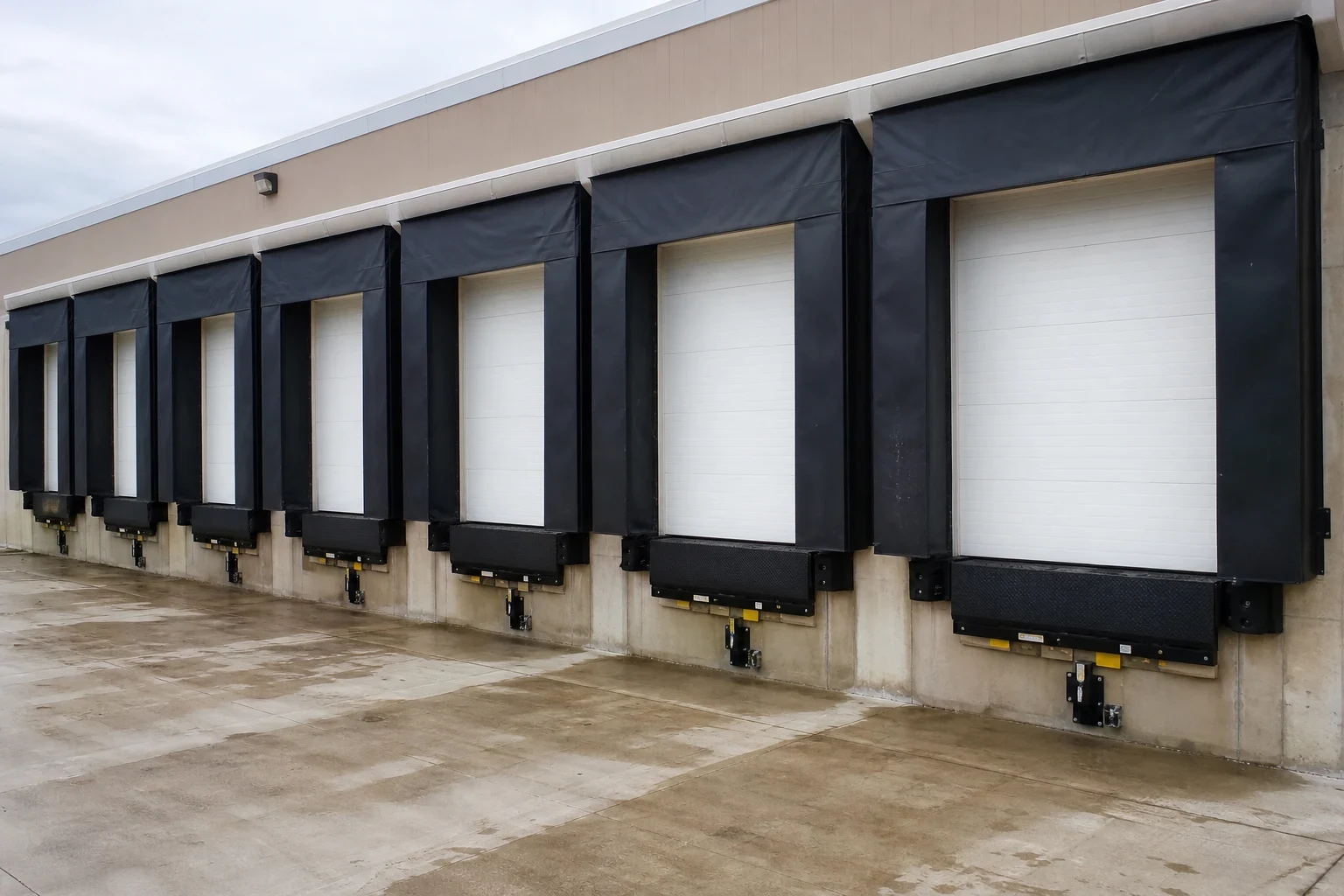
Start your new dock on solid footing
Tell us which positions you are thinking about and what you receive, and we will plan a site visit. We work with facilities in Palmerton, Lehighton, Slatington and the surrounding area.