ServicesOverhead Doors
Overhead Door Repair and Maintenance in Palmerton
We repair and maintain sectional and rolling steel overhead doors at loading docks, with the aim of making the door you already own last. Springs, cables, rollers, tracks, seals and operators get the care they need before a small fault leaves a busy bay stuck open.
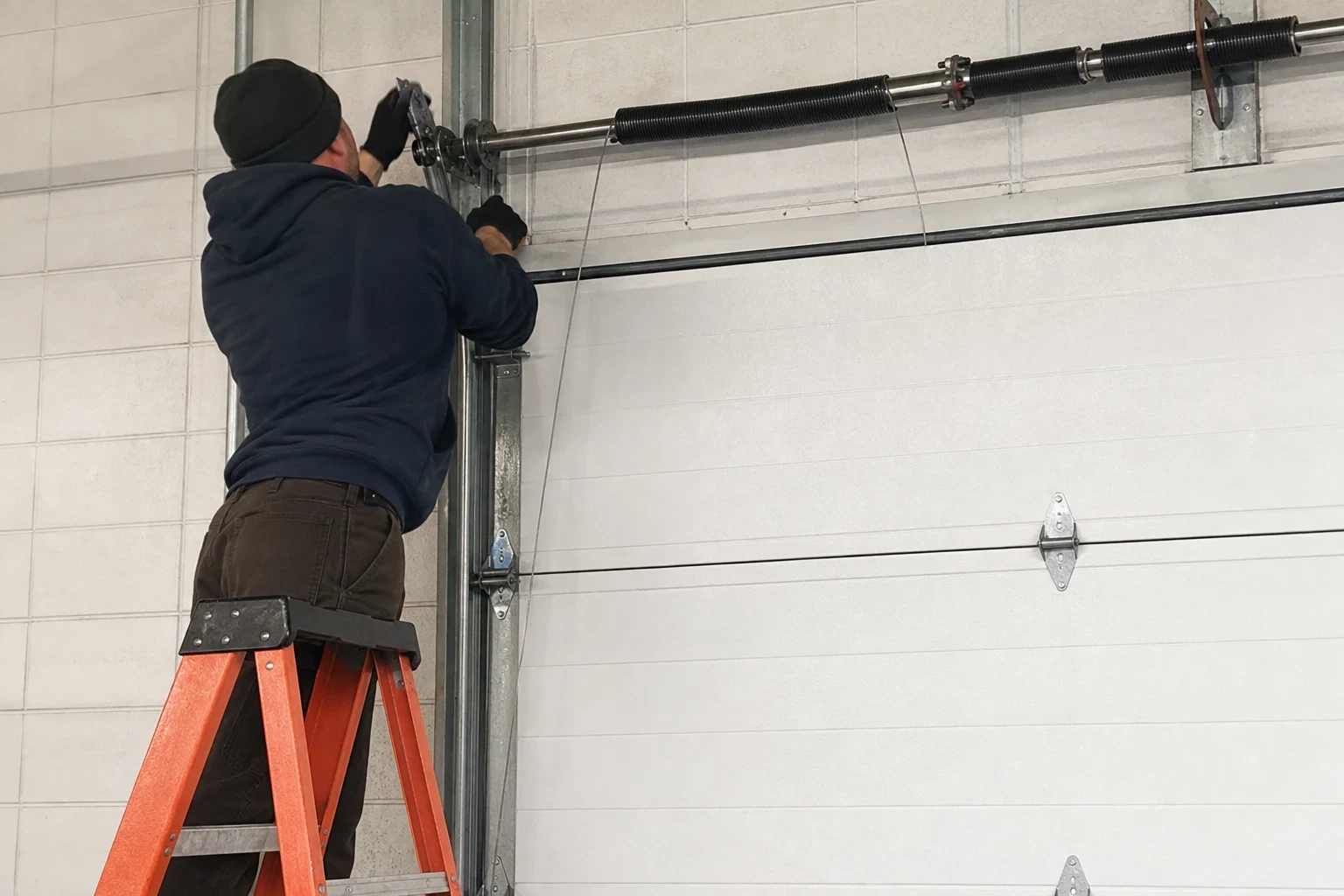
Dock doors that keep working year after year
An overhead door at a loading dock may cycle dozens of times a shift. Every cycle wears the torsion springs, stretches the cables, and grinds a little more off the rollers and hinges. Most doors that fail suddenly gave plenty of warning first: a slow drift, a new noise, a gap of daylight along the bottom.
We look after those wear points so a door that is structurally sound keeps doing its job. That usually means replacing a worn part, rebalancing the door and adjusting the track, not replacing the whole opening. When a door truly is past saving, we say so plainly and explain why.
Our work covers warehouses, distribution centers, manufacturers and retail receiving docks. If your door also needs attention from our dock levelers or vehicle restraints service, we can look at the whole bay on the same visit.
What our overhead door service covers
- Torsion springs and cables
- We replace broken or tired springs matched to the door's weight, then set tension so the door balances by hand. Frayed or rusted lift cables are replaced in pairs so both sides lift evenly.
- Rollers, hinges and track
- Flat-spotted rollers and cracked hinges are swapped out, and bent track is straightened or replaced. We check that the track is plumb and fastened tightly to the jamb, since loose track is behind many off-track doors.
- Panel and section repair
- A section dented by a forklift mast or trailer can often be replaced on its own when the rest of the door is in good shape. We match the section as closely as the door's age allows.
- Seals and bottom astragal
- Worn bottom seals and perimeter weatherstripping let in cold air, water and debris. New seals help hold temperature at the dock and keep grit out of the track.
- Operators and safety devices
- We service the operator and set where the door stops at the top and bottom, along with how hard it pushes before it backs off. Then we break the sensor beam and press the bottom edge by hand to confirm the door halts and travels back up when a person or a pallet jack is in the way.
Signs your overhead door needs attention
The door drifts or won't stay put
A door that creeps down from half open, or shoots up on its own, is out of balance. That is almost always a spring issue and puts strain on the operator.
Grinding, banging or squealing
New noise usually points to dry or worn rollers, a loose hinge or a spring near the end of its life.
Frayed cable or uneven travel
If one side of the door rises ahead of the other, or you can see broken strands on a cable, stop using the door and have it looked at.
Daylight along the bottom or sides
Gaps mean worn seals or a door that is no longer seating evenly. Through a Pennsylvania winter, that shows up in heating costs and ice at the threshold.
The operator strains or reverses
An operator that hums, stalls or reverses for no clear reason is often compensating for a door that has gone heavy or is binding in the track.
What a door service visit looks like
- 1
Describe the door to us
By phone we ask what kind of door it is, how big, what it is doing and how busy the bay is. That way we arrive with the parts you are most likely to need.
- 2
Check it closed and running
With the door down we look at springs, cables, track and hardware, then cycle it fully to watch its balance and travel. Our crew holds forklift and scissor lift training certification, which counts when work happens high over an active dock floor.
- 3
Findings in writing first
You receive a plain list of what we saw, with photos, sorted into what needs doing now and what can wait. We replace nothing until you approve it.
- 4
Repairs in a secured bay
We rope off the work area so traffic goes around us. The door is secured, and springs are wound and released with the proper bars.
- 5
Testing and cleanup
We run the door again and again, make sure the safety devices react, and leave the dock clean, taking the old parts with us.
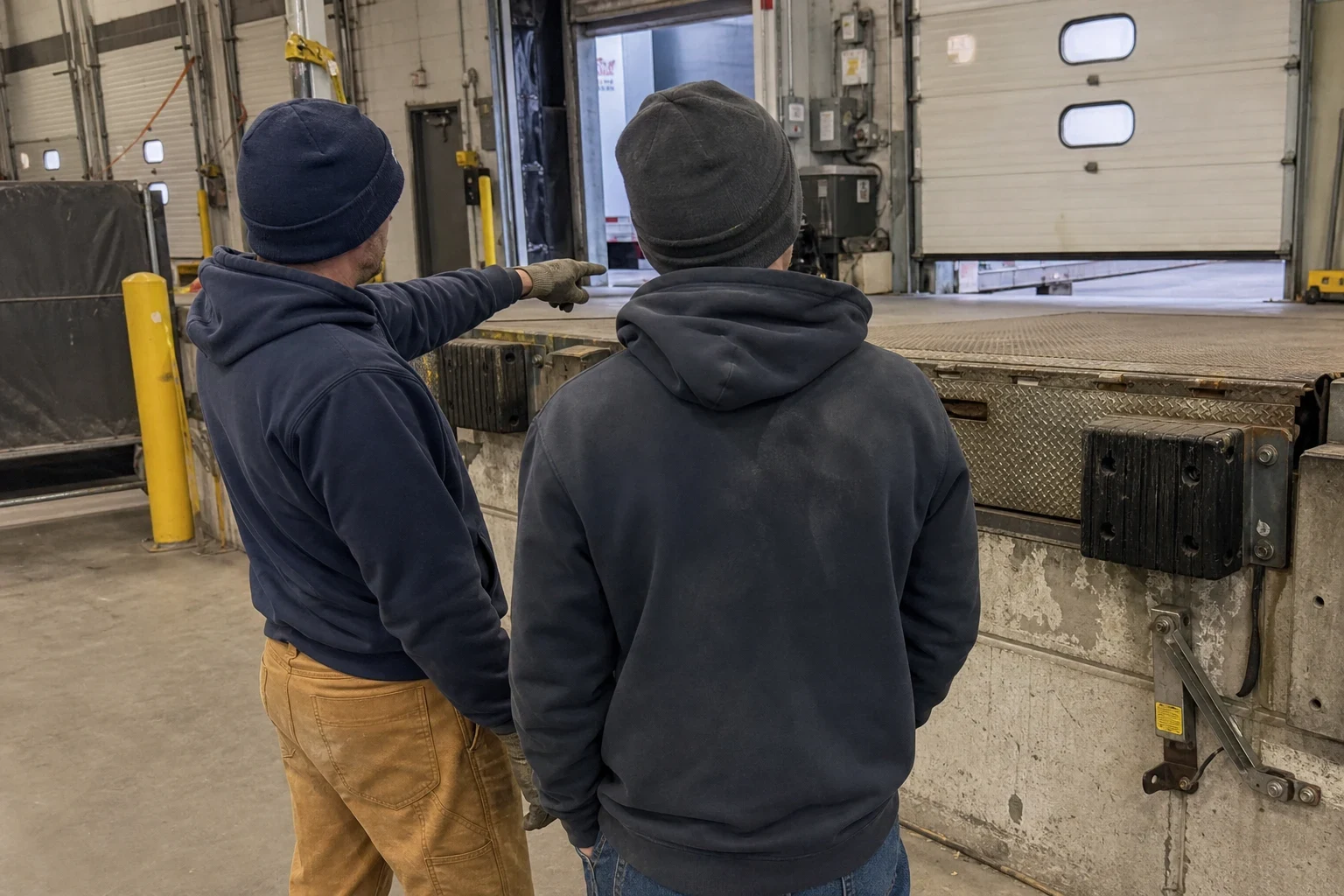
What shapes the cost of overhead door work
Every door and dock is different, so we price from what we see on site. The written findings show each part and the labor separately, so you know exactly what you are paying for before we start.
- Door size and type
- Larger and heavier doors need heavier springs and more hardware. Insulated sectional doors and rolling steel doors use different parts and take different amounts of time.
- Spring condition and cycle rating
- Choosing higher-cycle springs costs more at the start but suits a bay that runs all day and stretches the time between replacements.
- Parts for older doors
- Some older doors use sections or hardware that are hard to source. We tell you early if that affects the price or timing.
- Access and lift work
- High headroom, tight spaces or equipment in the way can mean a lift is needed, which adds setup time.
- Scheduling around operations
- Work timed around shift changes or slower receiving hours may affect the schedule and the visit length.
Overhead door questions we hear
Something not covered here? (610) 707-8031
Is it better to fix our dock door or replace it?
When the sections and frame are in good shape, a repair usually gives more for the money, and a well-adjusted door can keep running for years. Several damaged sections, heavy rust or parts that are no longer made point toward replacement. Either way you get a straight answer and the reasons behind it.
How long will the door be out of use?
Spring, lift cable and roller work is usually finished in a single visit. If a new section or an unusual part must be ordered, we may return once it comes in. We tell you up front how long the door should be down so you can adjust receiving.
Do your repairs come with a warranty?
They do: a 1-year labor warranty. If a part we worked on causes trouble because of how we fitted it, call and we will return to fix it.
How often do dock doors need service?
That follows how much the door is used. A busy bay does well with checks several times a year, and a quiet door may need fewer. Our loading dock preventative maintenance service can put your doors on a fixed schedule together with your levelers and restraints.
Can you swap one dented section and keep the door?
In many cases, yes. We change the damaged section, then look over the nearby track and hinges, because a hit hard enough to dent a panel can also shift hardware out of line.
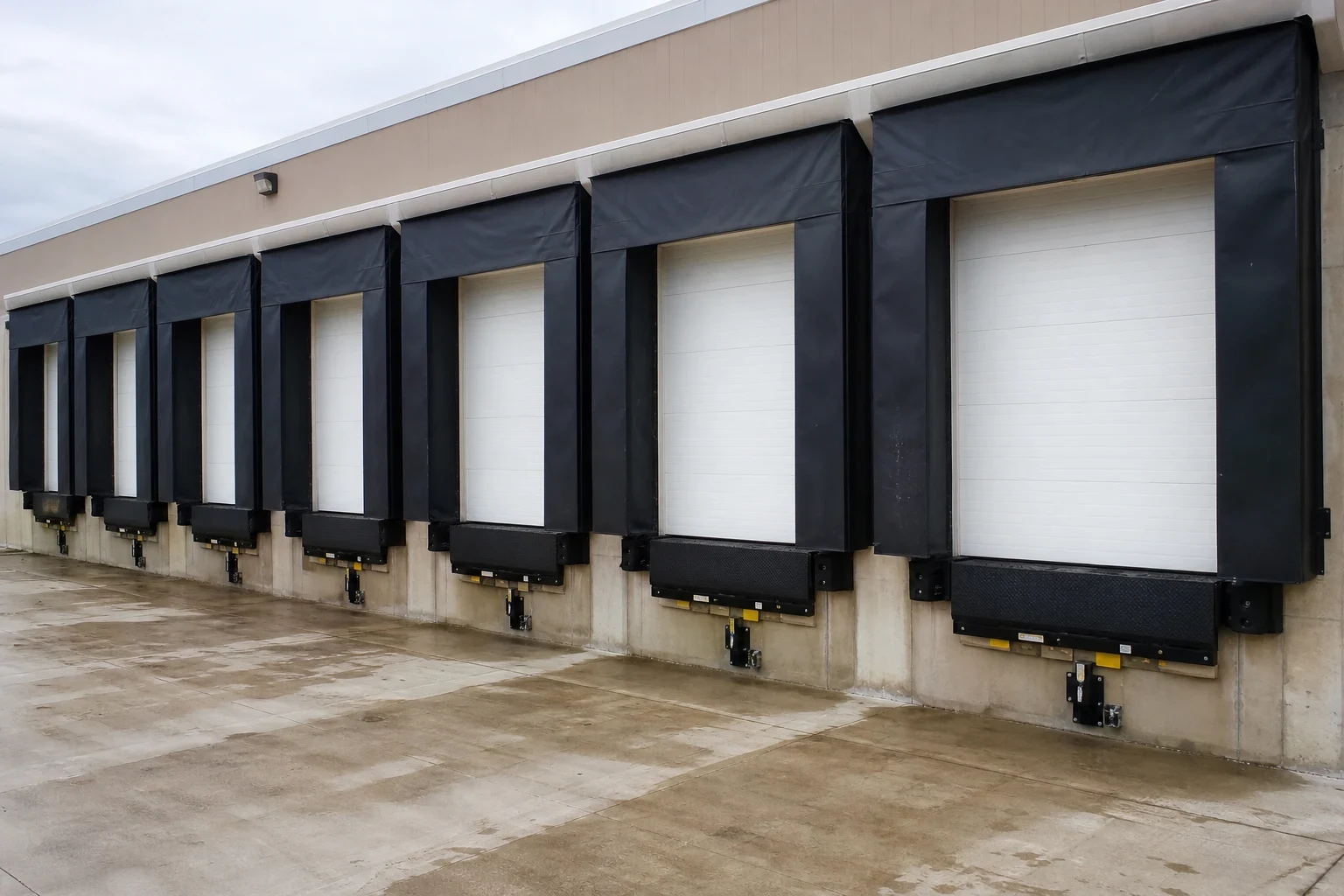
Give your dock doors a longer working life
Tell us what your overhead door is doing and how busy the bay is. We will plan a visit around your operation and look after the parts that keep it running.