ServicesEquipment Sales
Loading Dock Equipment Sales in Palmerton
We help warehouses, manufacturers and stores with receiving docks choose dock levelers, vehicle restraints and doors that fit the trucks and loads they handle. Every recommendation starts with one question: what will keep running well, with sensible upkeep, for many years?
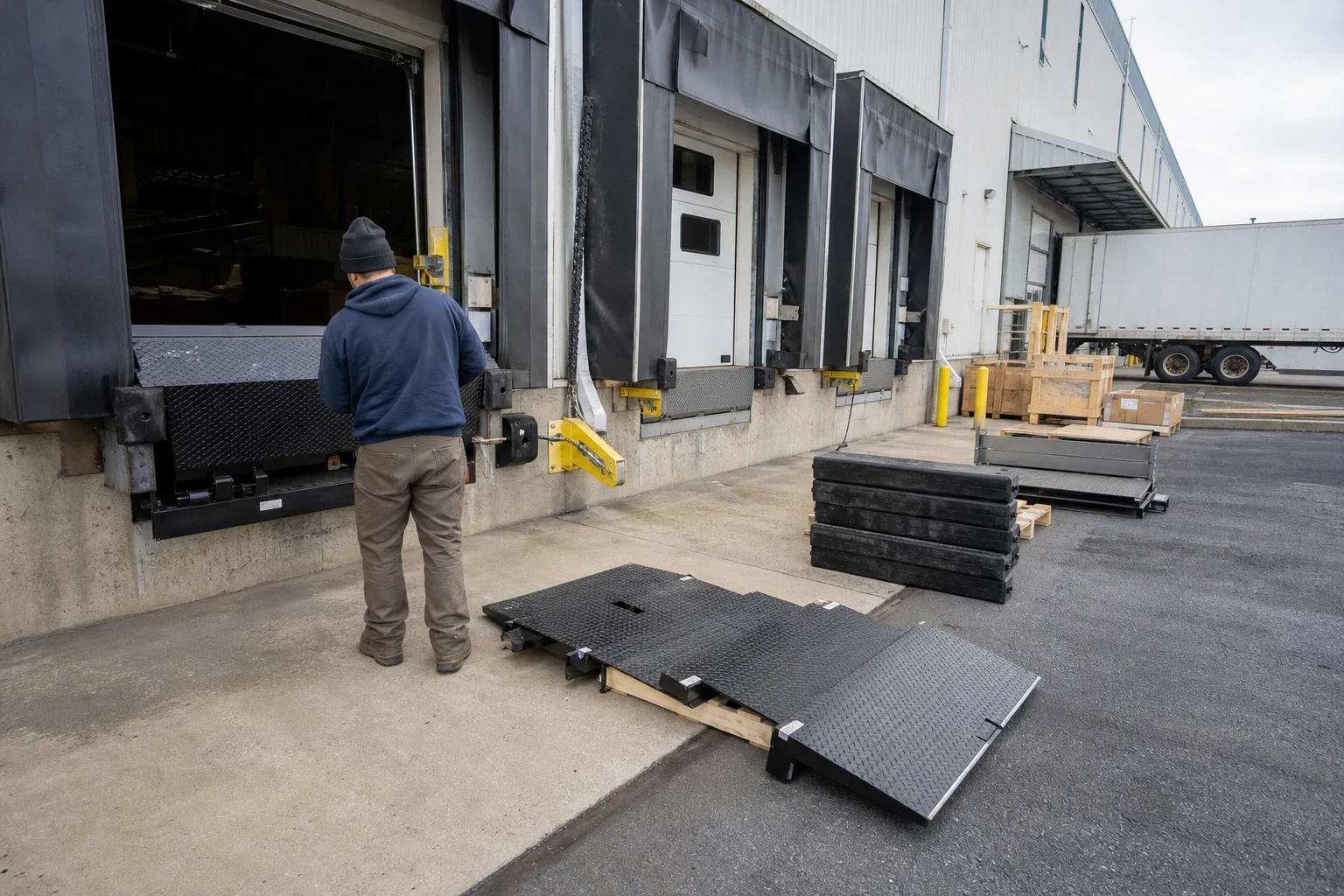
Buying equipment with the long run in mind
Good maintenance starts at the moment of purchase. A dock leveler sized wrong for your trailer heights, or with a lip too short for the gap, wears faster and costs more to keep in service. Before we suggest anything, we look at your dock height, the trailers that back in, your heaviest loads and how many cycles each position sees in a shift.
Sometimes the honest answer is that you do not need new equipment at all. If a hydraulic leveler still has a sound deck and frame, a new power unit or cylinder may serve you better than replacement, and we will say so. When replacement does make sense, we lay out the options side by side: hydraulic or mechanical levelers, wheel-based or hook-style vehicle restraints, insulated overhead doors or high speed doors for a cold room.
Long winters are hard on dock positions that stay open through a receiving window, so we pay close attention to insulation, sealing and how a door panel holds up to cold and the occasional forklift bump. The result is equipment that suits your facility and a clear picture of the care it will need.
What our equipment sales include
- Measurements taken at every door
- Before we suggest any equipment, we record the height of each dock face, the size of any leveler pit, the clear opening of the door and the slope of the drive where trucks back in. We also check the concrete, bumpers and existing controls, since new equipment can only perform as well as the structure it is bolted to.
- Options explained in plain terms
- You get a written comparison of the equipment that fits, with capacity, construction and expected upkeep for each. We explain why we would choose one over another for your operation.
- An honest repair-or-replace answer
- If a repair will give your current unit years of useful life, we tell you. We would rather keep sound steel in service than sell something you do not need.
- Installation by our own crew
- Our technicians are forklift and scissor lift training certified, which matters when a leveler deck or a heavy door section has to be lifted and set safely. Installation labor is backed by a 1-year labor warranty.
- Fit with what you already run
- New vehicle restraints, levelers and doors often need to talk to each other through interlocks and control panels. We match new equipment to your existing setup so the sequence works the way your operators expect.
- A maintenance plan from day one
- Every sale comes with a recommended service schedule. Many customers fold it into our loading dock preventative maintenance visits so lubrication, adjustments and wear checks happen before problems do.
When new dock equipment may be the better move
Repeat repairs on one unit
A leveler or door that needs fixing every few months can end up costing more in repairs than a sound replacement would. We go over its repair record with you and tell you straight where it stands.
Trailers that no longer match the dock
New carriers or different trailers can leave the lip too short or the deck at a sharp slope. Pallet jacks, loads and workers' backs all feel it.
Relying on wheel chocks alone
Chocks get left off and slide on ice. A vehicle restraint keeps the trailer at the dock and shows drivers and forklift operators a clear signal, a real safety gain.
Doors that leak heat or keep getting hit
Dented panels, tired seals and drafts make the building costly to heat and can let product warm up. A better-fitted overhead door or high speed door can solve it.
Parts are harder to get
Some older units outlast their parts supply. If one failed part could close a position for weeks, replacing it on your own schedule is the steadier option.
From first call to first service
- 1
Talk it over by phone
Describe your docks, what is breaking down and how receiving works. We ask about trailer types, load weights and any changes ahead for your operation.
- 2
We walk your facility
On site we measure every position and check the pits, concrete and controls. Anything that affects your choice is photographed so you see it too.
- 3
Options on paper
You get the choices, the scope and every line item in writing. We order nothing until the plan sits right with you.
- 4
Install around your shifts
We work one position at a time so your other docks stay busy. The work zone is protected, and when we finish we clean up and take the old equipment away.
- 5
Training and the first service date
We show your operators the new controls and safety sequence, then book the first preventative maintenance visit so the equipment is looked after from the start.
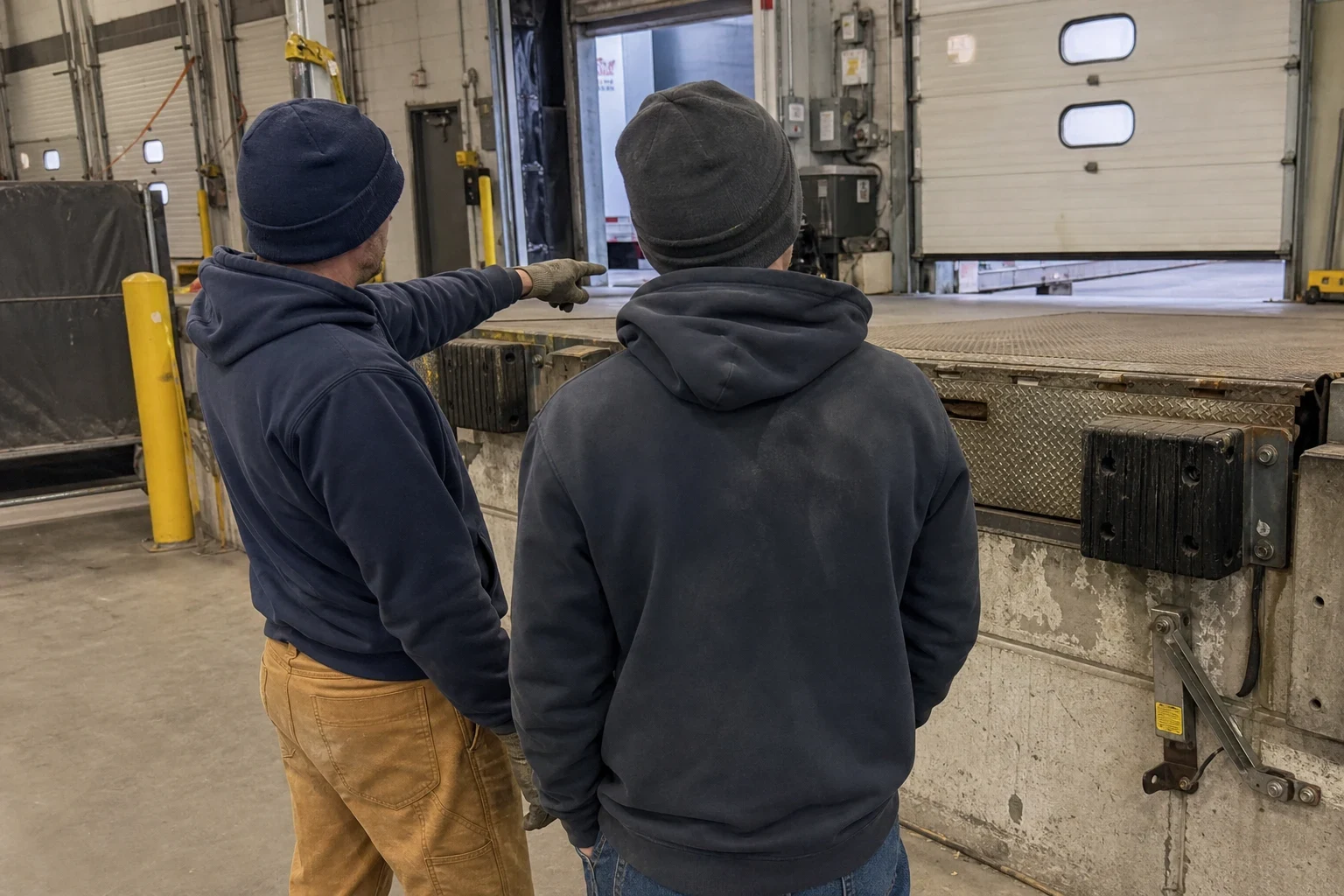
What shapes the cost of new equipment
Two docks with the same leveler on paper can cost very different amounts to equip. Most of the difference comes from the condition of the building and what the equipment has to connect to. We explain each line in your written quote so you can see where the money goes.
- Equipment type and capacity
- Hydraulic levelers cost more than mechanical ones but usually need less adjustment over time. Higher capacity ratings and longer decks add steel and cost.
- Pit and concrete condition
- A cracked curb angle or a pit that is out of square needs repair before new equipment goes in. Fixing it properly is what lets a leveler last.
- Controls and electrical
- Interlocks between vehicle restraints, levelers and doors add wiring and panel work. Existing power at the dock can lower that cost or, if outdated, raise it.
- Door size and construction
- Larger openings, insulated panels, vision windows and high speed operation each change the price of overhead doors and rolling grilles.
- Number of positions and timing
- Equipping several docks at once often reduces setup time per position. Work scheduled outside your busiest receiving hours can affect labor planning.
Questions about buying dock equipment
Something not covered here? (610) 707-8031
Does your own crew install what you sell?
It does. We handle loading dock equipment installation ourselves, and that labor comes with a 1-year labor warranty. Because the same team measures and installs, we answer for how the equipment fits your dock.
Will new equipment work alongside our current doors and levelers?
In most cases. During the walk-through we look at controls, mounting surfaces and interlocks. If a pairing will cause trouble, you hear it from us before purchase, not after delivery.
Is it better to fix our old dock leveler or buy a new one?
That rests on the condition of the deck, frame and hinge and on past repairs. With sound structure, swapping a worn part often gives better value. A cracked frame, or a leveler that no longer fits your trailers, points toward replacement for the long term.
What is covered on new equipment?
A 1-year labor warranty covers our installation labor. Before you buy, we walk through what comes with each piece so you know what is covered and who covers it.
Do our docks close while you install?
Just the position we are working on. We arrange the job so your other docks stay in use and settle the timing with you before booking.
Do you serve facilities beyond Palmerton?
We do, across the surrounding area, including Lehighton, Slatington, Lehigh, Towamensing and North Whitehall. The rest are on our service areas page.
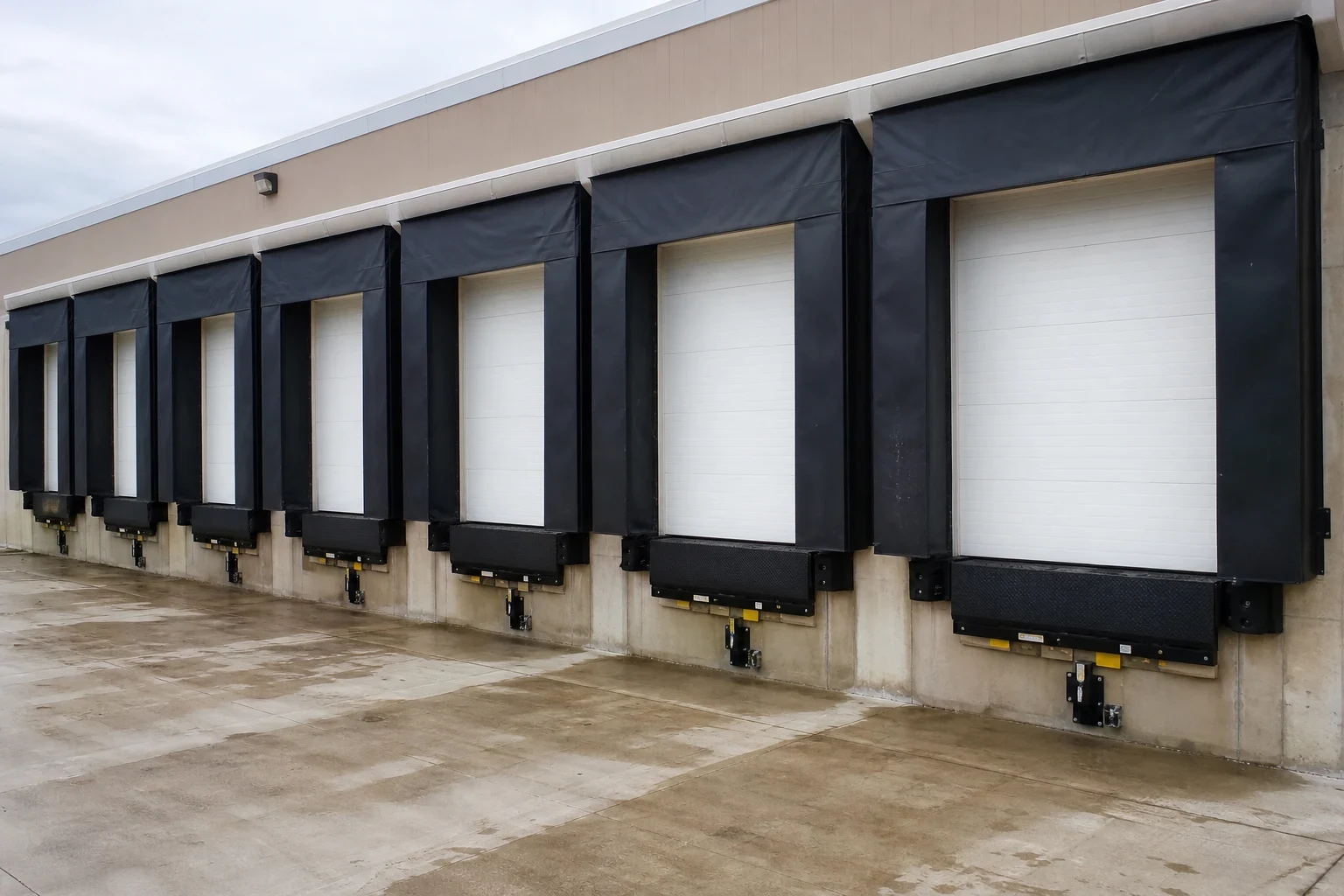
Plan your next dock purchase with care
Tell us what is wearing out and how your docks are used. We will walk you through the options and the upkeep each one needs, so the equipment you buy serves you for years.